


All about this ultra nutritious spring green (most likely peeking up above the soil in a field near you) in a moment. But first, an update:
I broke my rule about no long drives and traversed from North Carolina to Connecticut in one day. At rest stops along the way, I crawled into the back of my Subaru for naps in the cloud-like bed I made for myself and stopped for supermarket sushi, granola bars and coffee. The trip ended up costing me a total of 17 hours. I still prefer short drives and wilderness camping over multiple days to make a journey somewhere, but it was nice to get back to the little life in New Haven I’ve come to cherish.
I was talking to my friend Chanelle Allesandre* about the whirlwind of the past week and she said, “It was that weird portal time/end of winter into spring & daylight saving, so that changes everything somehow” - I felt that, maybe you do too. Is there ever a year when Spring doesn’t come on so suddenly? I’m not farming this year but I’m still infused with that euphoric spring panic of having one million things to do and for every item crossed off the list, ten more items appear. Which brings me to the subject of this newsletter - Nettles.
*In case any New Haven residents are reading: Chanelle is playing a show this evening at Volume Two.
NETTLES URTICA DIOICA
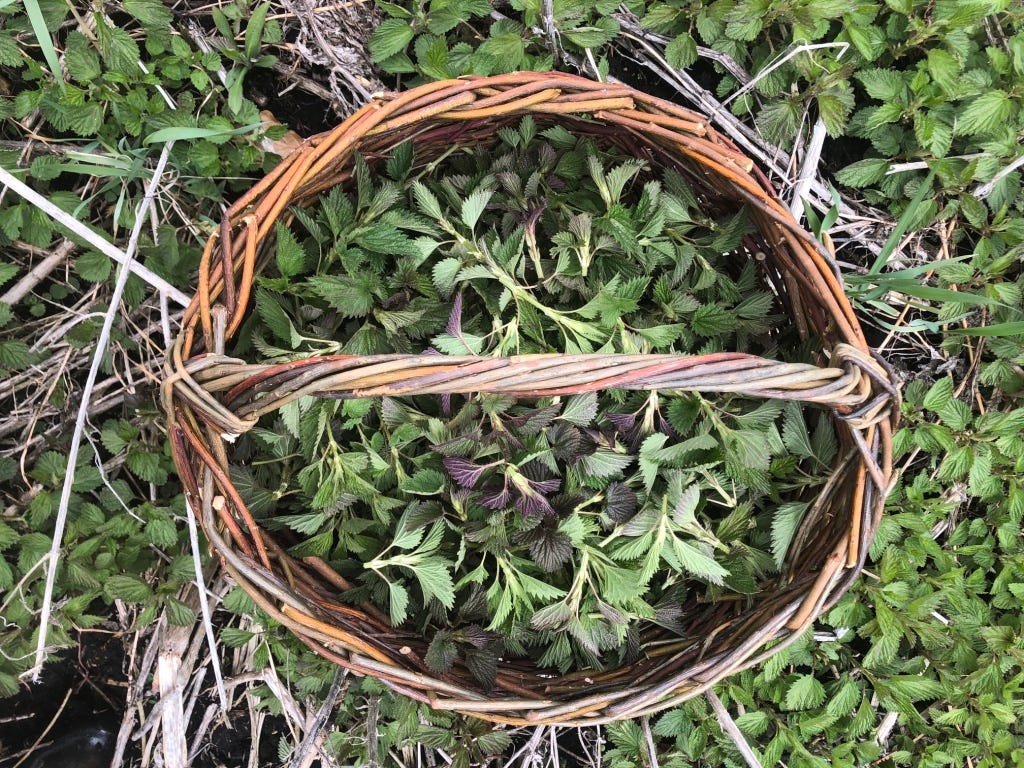
As I alluded to in the subtitle of this Newsletter, Nettles are far more nutritious than basically all of our farmed vegetables. Really makes you wonder why we burn fossil fuels to rip this perennial crop out of the landscape, only to replace it with nutritionally inferior cultivated vegetables that require soil amendments and pesticides to thrive. My partner, Hayden Stebbins, wrote about this conundrum in his dissertation for a Masters of Science in Sustainable Horticulture and Food Production at Schumacher College in 2013. I was perusing this document for inspiration and found data outlining this nutritional point:
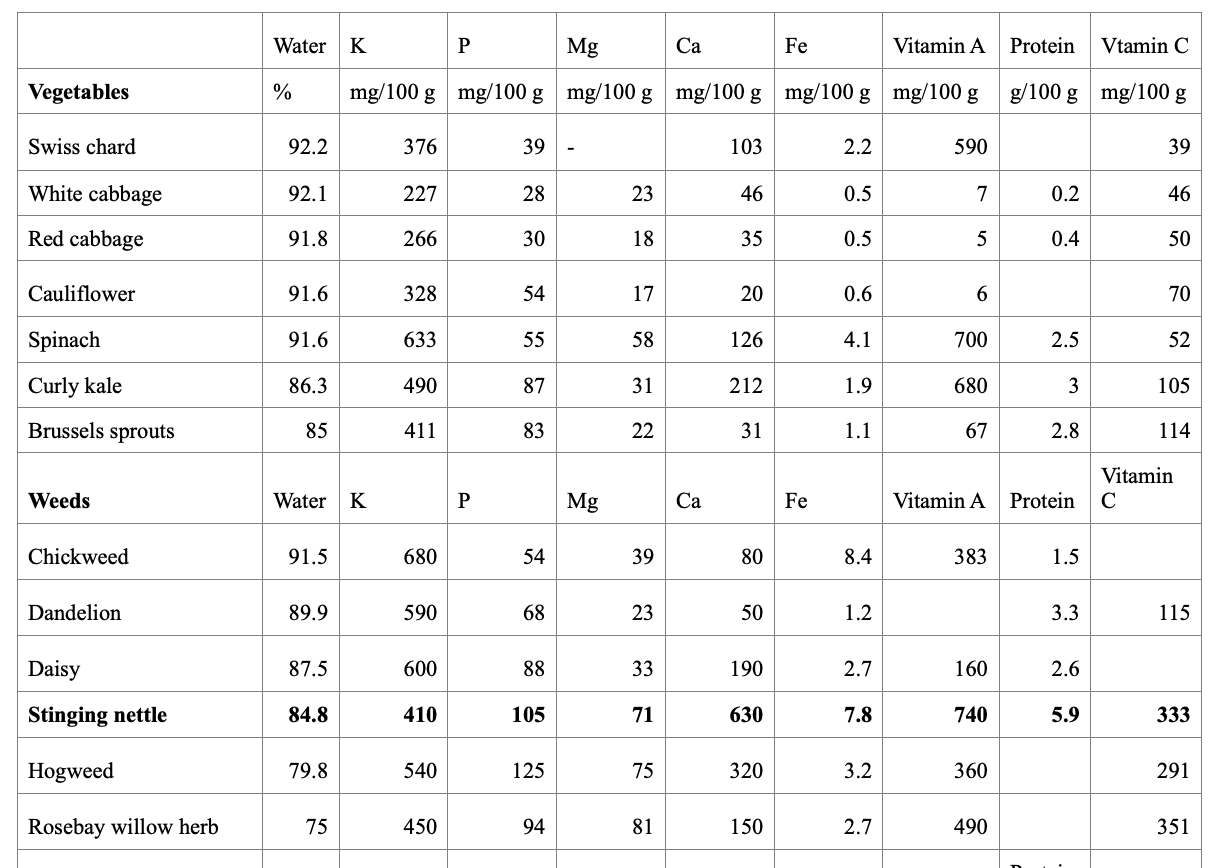
Not that we shouldn’t enjoy our cultivated vegetables: I know I do! But why not incorporate and celebrate a variety of wild greens in our kitchen too. (I am once again linking my wild spring greens pesto recipe) Spring is the perfect time to get into foraging because it is now and over the next few months that we will see the most coveted and tender spring greens popping up all around us. I always marvel at the mineral rich nature of the earliest spring greens: Nettles, yellow dock, chickweed, shepherd’s purse - have they been underground mining the minerals all winter only to bring it to the surface just when we need it most? Honestly, I don’t know why spring greens seem to be the most nutritionally dense, but I do know I love them for it.
Last year I wrote about the twin emotions of spring: Inspiration & Irritation. I think Nettles are a key herb for grounding us during this sometimes turbulent seasonal transition. Daily infusions of Nettles give a little boost of energy during this moment when activity ramps up and winter’s hibernation is suddenly and decidedly over.
My current preferred Nettles infusion:
Nettles are slightly drying so I tend to add Marshmallow or Violet to the infusion to balance that out with mucilage rich moist herbs. My constitution tends towards dryness, so this is important for me, but it might not be for you. I also add these Roses because they taste like the coastal waters where they were collected and add a certain sweetness I find reassuring. You might also try combining Nettles with herbs in the mint family to add a little calming and carminative movement: Lemon Balm or Catnip for example.
In short,
Dried, cut & sifted Nettles
Dried, cut & sifted or powdered Marshmallow Root
Dried, whole Rose Petals
For ratios advice on how to make the infusion/tisane, go here.
To find herbs grown organically by small farms in your region, go here.
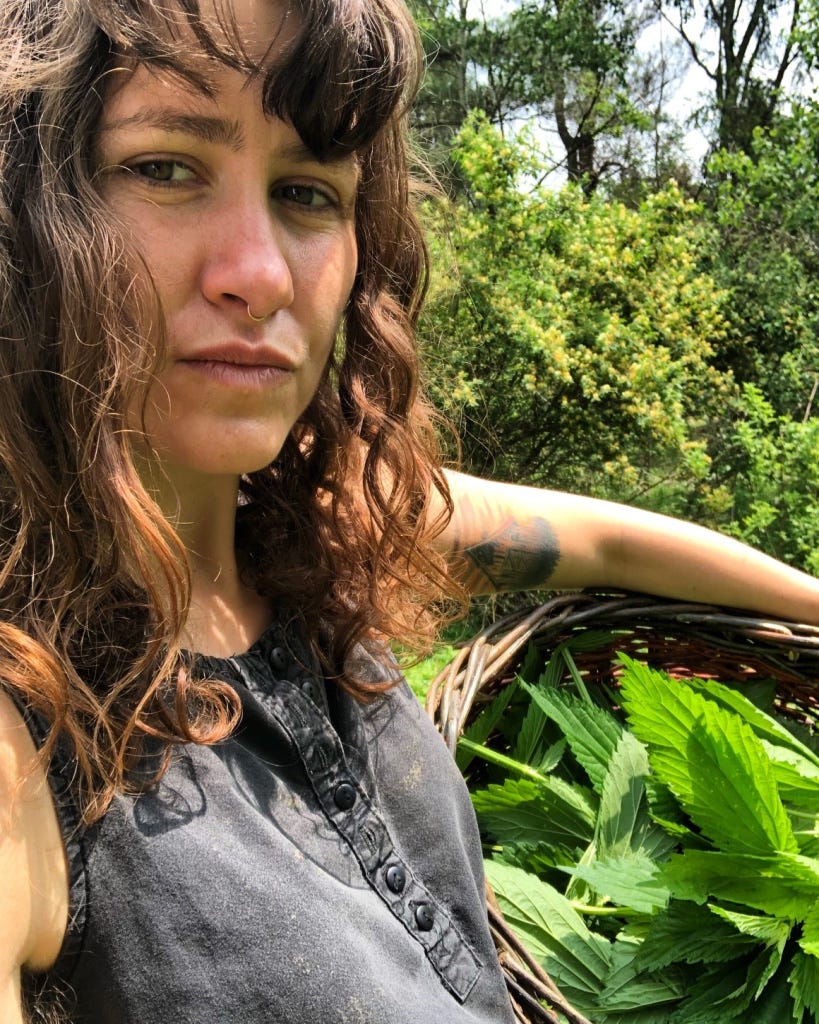
My plant profile on Nettles, pulled from the course booklet for Bioregional Herbalism & Medicine Making:
Harvest: The young shoots and leaves in mid-late spring. Stop harvesting the leaf once the plant flowers. Harvest the seed in late summer. The root can be harvested in autumn.
Stinging Nettles thrive in nutrient rich wayside places: old manure piles, septic fields, the edges of agricultural fields. These rich soils in which Nettles grow generally have a steady water source, especially in spring. Those who do not appreciate the virtues of Nettles consider them a scourge because they can easily cover acres of land if the conditions are right. The aggressive growth habit of Nettles, paired with the million of stinging hairs the plants are covered in make it a hard plant to remove, as many farmers wish to do. On the other end of the spectrum, when I found a small Nettle patch peeking out of a hillside on our land in the finger lakes, I immediately got to work weeding the patch and top dressing it with compost to encourage it to take over the whole hillside. Members of the Urtica genus are native all around the world.
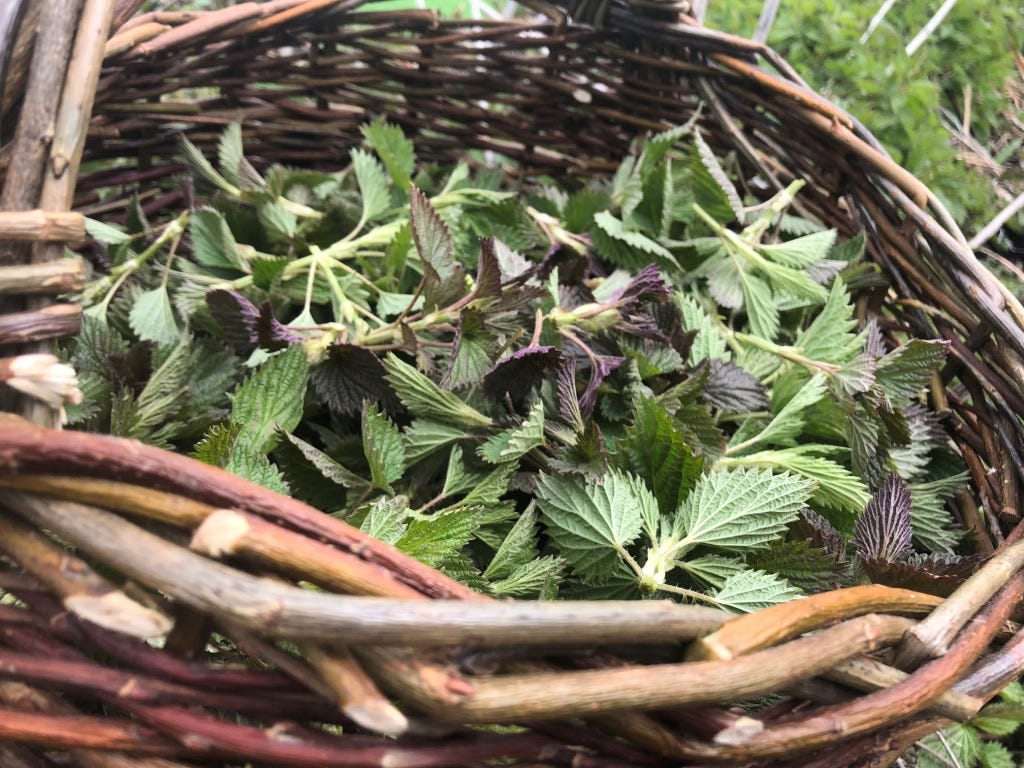
The young shoots, leaves, seeds, and roots all have recorded uses. I primarily work with the young shoots, leaves, and occasionally seeds. The root, according to Matthew Wood in The Practice of Traditional Western Herbalism is used in prostate related issues, however I will not be expanding on any root uses as I have no experience with them. The seed is specific for acute kidney related issues. Unless otherwise indicated, I am referring to the young shoots and leaves in this plant profile.
Nettles key uses in the apothecary are building up nourishment through their incredibly high content of vitamins and minerals, relieving symptoms of allergies, helping reduce the pain of rheumatism and gout, and relieving the pains of arthritis through urtication.
Nettles are the ideal nutritive tonic. They are rich in Potassium, Magnesium, Calcium, Iron, Protein, Vitamin K, A and C. Daily watery infusions of Nettles are recommended as a remedy for people with anemia, low blood pressure, or general fatigue. Nettles is one of the few herbs I recommend during pregnancy, in this case it can be combined with red raspberry leaf and alfalfa for a daily tonic tea. Although Nettles contain no caffeine, the effect of the rich nourishment can be stimulating. Nettles are among the first plants to come up in spring and I love to work with them as a nourishing spring tonic to help me prepare for the increased physicality of summer. I infuse Nettles in vinegars (an excellent solvent for minerals), cook the fresh shoots in the skillet, and dry as much as possible for tea. Nettles should not be consumed raw as the hairs can sting your mouth. Cooking, infusing in hot water, and drying all wilt the stinging hairs which could otherwise irritate the throat passageway and cause harm.
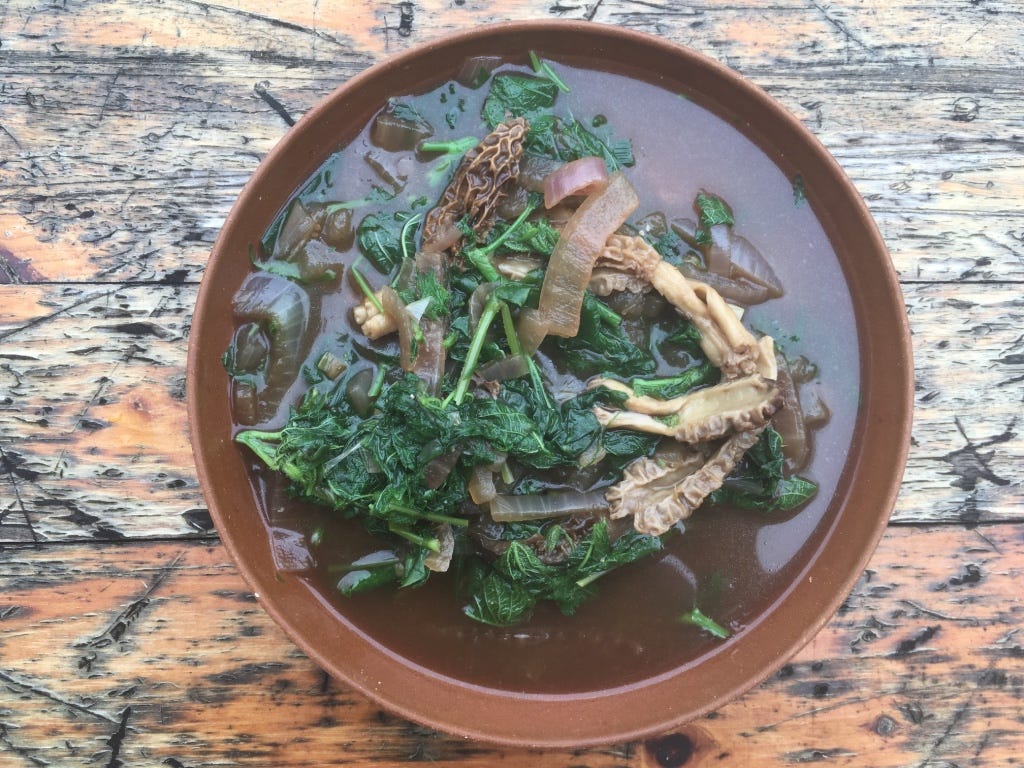
Nettles are usually the first herb I think of when someone is suffering from seasonal allergies. They mildly desensitize the mucosa that are over reacting to allergens and assist in removing excessive phlegm. This action combined with their general anti-inflammatory properties makes them a great choice for combating the symptoms of seasonal allergies at their on-set. Nettles increase the excretion of uric acid, therefore making them helpful in the case of rheumatism and gout. For allergies, rheumatism, and gout, Nettles should be drank as a watery infusion.
In my last point about Nettles, I finally discuss the first thing most people notice about them: their stinging hairs! The stinging hairs primarily exist on the underside of the leaf and the stem, but you will find some on the top of the leaves as well. Each one of these little hairs is poised and ready to inject histamine and acetyl-choline into the skin. The result is a stinging sensation and raised bumps for most people. However, if a person is suffering from arthritis, rubbing against Stinging Nettles overloads the pain signals in the area rubbed by the Nettle hairs and blocks the pain signals of arthritic joints. I used to work with a gardener in his 40s who had arthritis in one elbow. On days when it would flare up, he would visit our Nettle patch, chop a branch and rub it all over his painful area. At first he would be wide eyed with the painful stimulation of the Nettles, but quickly that would subside and his relief from arthritis pain would last throughout the day.
WARNING: Do not eat Nettles raw. Cooking, infusing in hot water, and drying wilts the hairs and makes Nettles safe to consume internally.
Medicine Making: I do not recommend tincturing Nettles. Their medicinal properties are best extracted through water and vinegar. Note that Nettle is a drying herb and daily consumption can be overly drying for some constitutions.
Watery Nettle infusion: 1/4 cup of dried Nettle leaf in a quart sized mason jar or tea pot with just boiled water poured over up to the fill line. Covered. Steeped at least 20 minutes, but ideally overnight for maximum extraction. I tend to combine my Nettle infusions with moistening herbs like marshmallow & violet as alone it can be slightly drying. Drink as a nourishing tonic.
Nettle Vinegar: I make Nettle Infused Apple Cider Vinegar to add to salad dressings and also to use as the base of a conditioning hair rinse. Do you want me to write more about vinegar infusions and share those recipes?
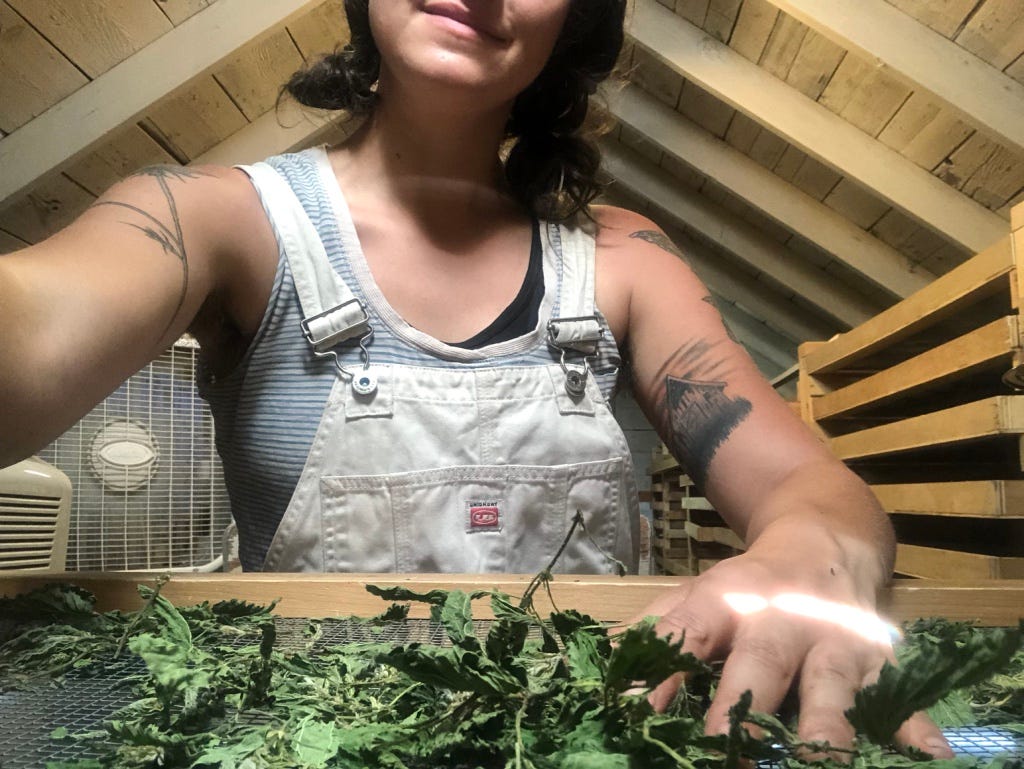
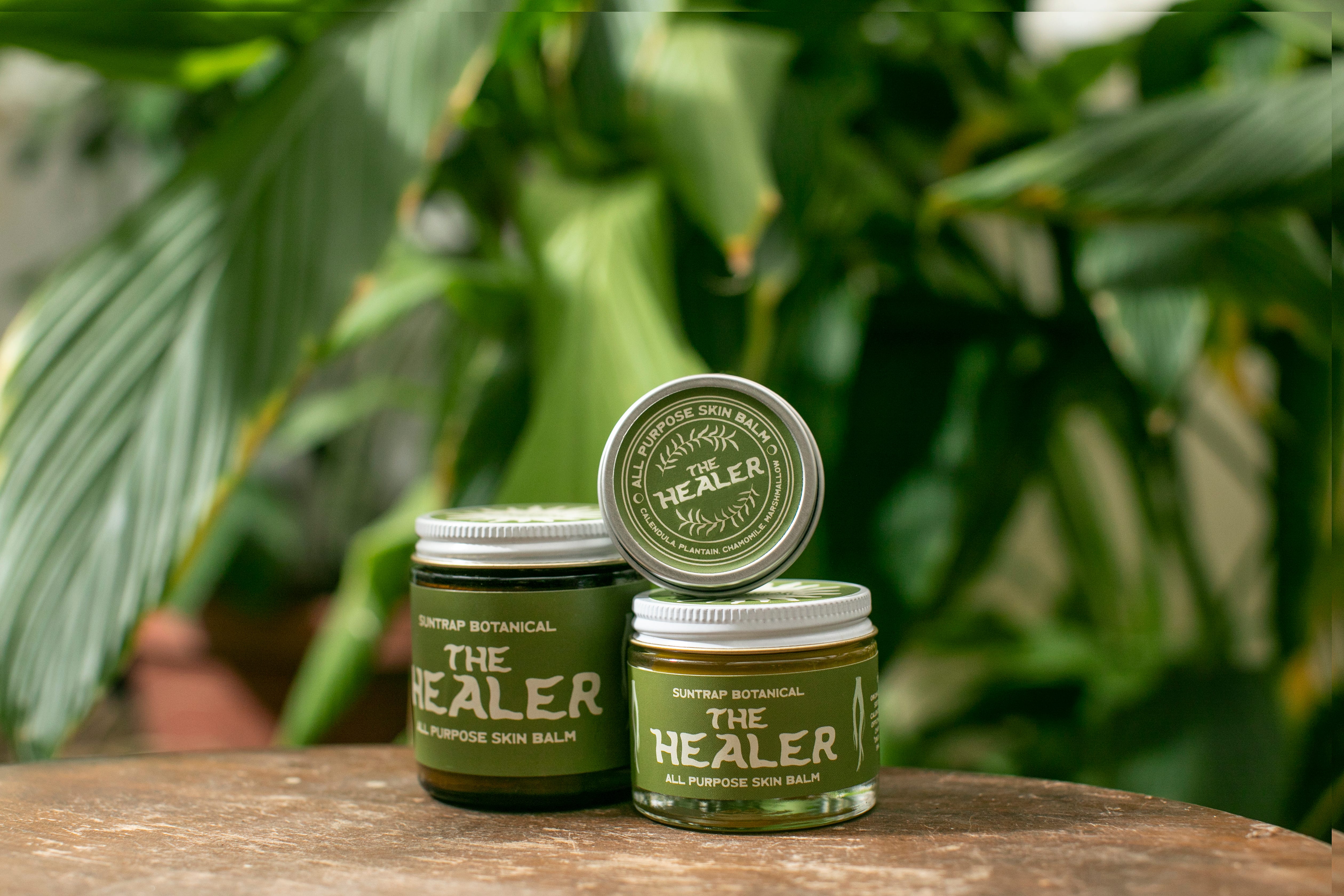
Back in the studio & shipping The Healer Balm far & wide. A recent review that made me swoon:
I live in the southwest and it’s so important to have a good moisturizer that heals skin quickly. I LOVE the feel of this salve, it’s dense and a little goes a long way, especially with a spritz of rose water or any other liquid, and the aroma has become a familiar friend because I use this so often. Thanks Geraldine. -Alyssa D.
In other news, it’s officially deer tick season again. Don’t shy away from the woods, but do check yourself all over and often!
I hope you get to drink and eat a lot of Nettles this spring <3
Signing off,
Geraldine
Geraldine, what timing on this nettles edition! It remains my fave n most regular herb, and this year I'm hellbent on growing it just to urticate my flare-ups. Appreciate the page out of your book. Still using the Healer on my face and hair~ tyty
Thank you for reposting this <3 We are just about to have a group nettle forage on the farm in 2 weeks. What a magic plant.